The Regenerative Shift
Conversations with the Delano Institute
A comprehensive podcast series exploring how humanity is moving from extraction to regeneration, from scarcity to abundance, from isolation to community. Discover the frameworks, platforms, and practices catalyzing planetary transformation.
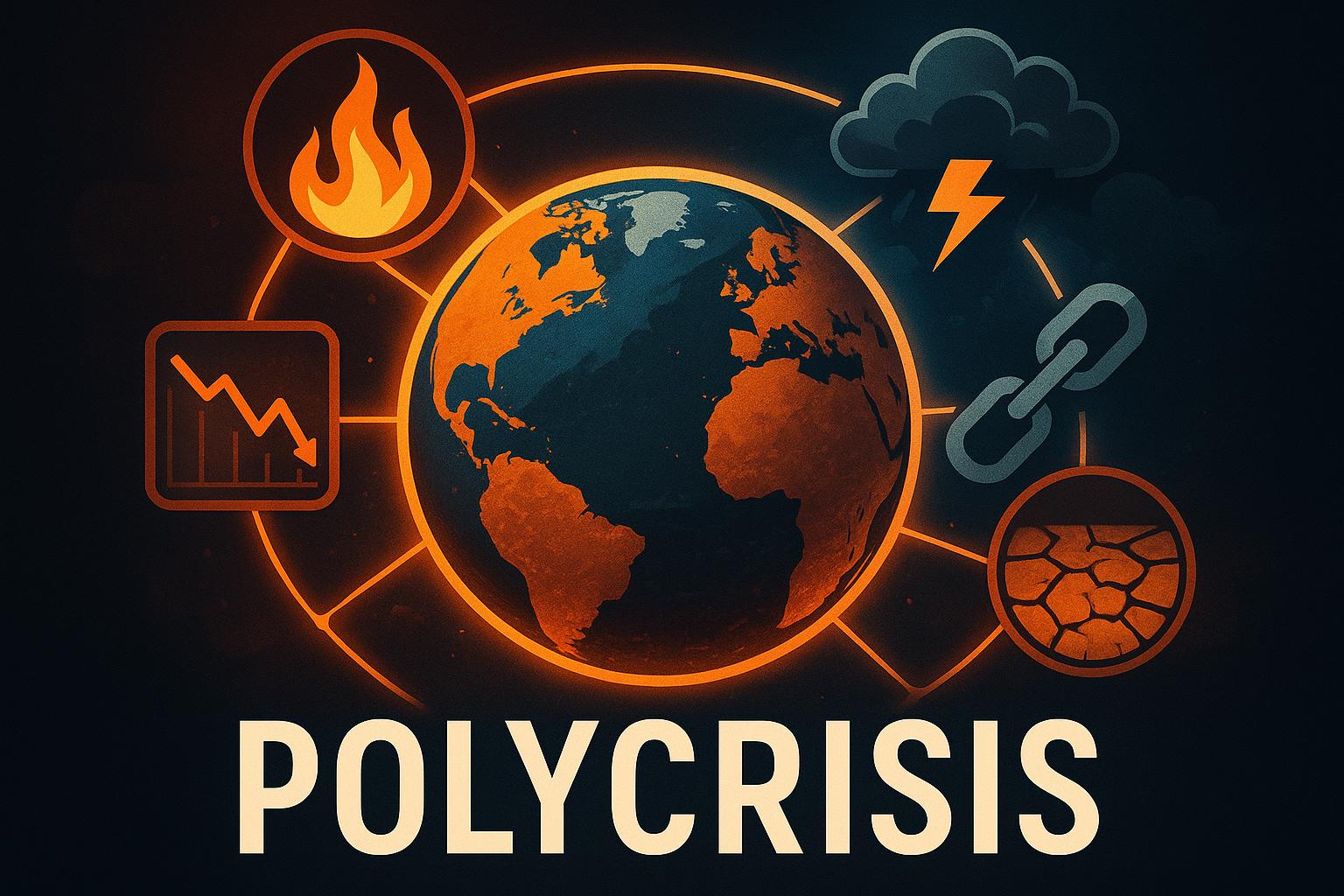
World on Fire: Understanding the Polycrisis & Metacrisis
Navigating the Interconnected Crises of Our Time
We live in an era defined not by isolated challenges, but by a complex web of interconnected crises that amplify and accelerate one another. Climate breakdown, economic instability, political polarization, ecological collapse, and social fragmentation are not separate problems—they are threads in a single, tangled knot. This episode explores the polycrisis (the symptoms) and the deeper metacrisis (the underlying illness) to help you understand the foundational conditions generating our global challenges.
The Delano Institute is coordinating the shift from degenerative to regenerative systems across economics, governance, ecology, and community. This podcast series reveals the complete ecosystem of frameworks and platforms enabling this transformation—and shows you exactly how to participate.
All Episodes
What if the solutions to our greatest crises already exist, but we're looking in the wrong places?
What if everything you've been told about solving climate change, poverty, and social breakdown is addressing symptoms instead of root causes? This episode introduces the Delano Institute's mission to shift humanity's impact from degenerative to regenerative by identifying and coordinating pressure on the right trimtabs—those small strategic interventions that create massive systemic change.
Visit delanoinstitute.org to explore our frameworks and find your role in the regenerative movement. The shift is happening—will you be part of it?
View Full Script(Click to expand)
[OPENING MUSIC: Hopeful, building, organic sounds]

NARRATOR: Close your eyes for a moment. Imagine a world where rivers run clear again. Where communities thrive without destroying their ecosystems. Where your daily work actively heals the planet instead of harming it. Where economic prosperity and ecological health aren't opposites—they're partners.

This isn't fantasy. This is the regenerative future being built right now by thousands of people across the globe. And the Delano Institute is coordinating the shift.

[PAUSE]

What if I told you that everything you've been told about solving climate change, poverty, and social breakdown is addressing symptoms instead of root causes? That we've been trying to fix broken systems with the same thinking that broke them in the first place?

Welcome to The Regenerative Shift—a podcast series exploring how humanity is moving from extraction to regeneration, from scarcity to abundance, from isolation to community. I'm your guide through the frameworks, projects, and people catalyzing this transformation.

[MUSIC TRANSITION]

The Delano Institute was founded on a simple but profound realization: our civilization is running degenerative systems. We extract resources faster than they regenerate. We create waste faster than ecosystems can absorb it. We break down community faster than we build it up. And we wonder why everything feels like it's falling apart.

But here's the thing—it doesn't have to be this way.

Buckminster Fuller, the visionary architect and systems thinker, taught us about the trimtab. It's a small rudder on a ship's main rudder. Moving the trimtab creates pressure that turns the main rudder, which turns the entire ship. Fuller used this as a metaphor for how small, strategic interventions can create massive systemic change.

The Delano Institute identifies these trimtabs across society—in water policy, in currency design, in governance structures, in community organization—and coordinates pressure to shift entire systems from degenerative to regenerative.

[PAUSE FOR EMPHASIS]

Think about the Colorado River Basin. Forty million people depend on it. It's running dry. The conventional approach? Build more dams. Ration water. Fight over scarcity.

The regenerative approach? Transform agricultural water use through regenerative practices that actually increase water retention in soil. Reform water law to recognize ecosystem needs. Create economic incentives for conservation. These are trimtabs—small policy changes that cascade into massive systemic transformation.

But here's what makes the Delano Institute different from every other think tank or research organization: we don't just identify problems and propose solutions. We build the actual platforms and frameworks that enable people to take action.

The Y Platform helps you discover your unique purpose and connects you with regenerative projects in your bioregion. Symbiosis creates the social infrastructure for community collaboration. Regenerate the Earth provides the scientific frameworks for ecological restoration. Karma Cash offers a regenerative currency that rewards positive impact. TERRA Response enables rapid community resilience. The Junto Revival brings back civic wisdom circles. And the Federalist Papers 2.0 reimagines governance for the AI era.

[BUILDING ENERGY]

This isn't just theory. This is a complete ecosystem for systemic transformation. And it's happening right now.

Over the next fourteen episodes, we're going to explore each of these frameworks in depth. You'll hear how regenerative systems actually work. You'll discover your role in the movement. You'll learn how small interventions create massive change. And you'll understand why this shift is not just possible—it's inevitable.

The question isn't whether humanity will shift from degenerative to regenerative systems. The question is: will we shift fast enough to avoid catastrophic collapse? And will YOU be part of making it happen sooner rather than later?

[PAUSE]

Because here's the truth that changes everything: you already have the skills, the passion, and the purpose needed to contribute. You just need to know where to apply them. That's what this series is about.

The regenerative future isn't something we're waiting for. It's something we're building together, right now, in thousands of communities across the planet. The Delano Institute is simply coordinating the shift—identifying the trimtabs, building the platforms, and inviting you to join.

[MUSIC SWELLS]

In our next episode, we'll dive deep into what "regenerative" actually means. Because if we're going to shift entire systems, we need to understand the principles that make regeneration work—from soil to soul, from watersheds to wisdom, from economics to ecosystems.

Until then, I invite you to visit delanoinstitute.org. Explore the frameworks. Read The Third Revolution. Join a Junto Circle. Discover your bioregion. Find a project. Take one small action.

Because the regenerative shift begins with you.

[CLOSING MUSIC]

This has been The Regenerative Shift, a podcast series from the Delano Institute. Subscribe wherever you get your podcasts, and join the movement to heal our planet.

The future is regenerative. The question is: are you ready?
What if the solution to scarcity isn't better management, but systems that create abundance?
What does 'regenerative' actually mean, and why is it fundamentally different from 'sustainable'? This episode breaks down the core principles of regenerative systems—from soil biology to economic design to community organization—and shows how they create abundance instead of managing scarcity.
Ready to shift from scarcity to abundance? Explore regenerative projects in your bioregion at our platform and start applying these principles today.
View Full Script(Click to expand)
[OPENING MUSIC]

NARRATOR: Pop quiz. What's the difference between "sustainable" and "regenerative"?

If you said "they're basically the same thing," you're not alone. Most people use these words interchangeably. But understanding the difference between them is the key to understanding why our current approaches to environmental and social problems aren't working—and what will.

Welcome back to The Regenerative Shift. Today, we're diving deep into what "regenerative" actually means, and why it changes everything.

[MUSIC TRANSITION]

Let's start with "sustainable." When we say something is sustainable, we mean it can continue indefinitely without depleting resources or causing harm. It's about maintaining the status quo. Not getting worse. Holding steady.

Sustainable agriculture means farming in ways that don't degrade the soil. Sustainable forestry means cutting trees at the same rate they grow back. Sustainable business means not destroying your resource base.

Sounds good, right? Here's the problem: sustainable assumes the current state is acceptable. It's about damage control. It's about managing scarcity. It's about doing less harm.

But what if the current state is already degraded? What if the soil is already depleted, the forests already fragmented, the communities already broken down? Sustaining a degraded system just locks in the degradation.

[PAUSE]

Regenerative is fundamentally different. Regenerative doesn't just maintain—it actively heals and improves. Regenerative systems create more life, more abundance, more health than they consume. They don't just avoid harm—they generate benefits.

Think about a forest. A truly regenerative forest doesn't just maintain itself. It builds soil. It increases biodiversity. It captures more carbon each year. It creates more complex relationships. It becomes MORE alive, MORE abundant, MORE resilient over time.

That's regeneration. And here's the revolutionary part: we can design human systems—economic systems, social systems, agricultural systems, governance systems—that work the same way.

[BUILDING ENERGY]

The Delano Institute has identified six core principles that make systems regenerative instead of degenerative. And once you understand these principles, you'll start seeing them everywhere—and you'll start seeing how to apply them.

**Principle One: Whole Systems Thinking**

Regenerative systems recognize that everything is connected. You can't fix one part without affecting the whole. When you intervene in a system, you're not just solving a problem—you're shifting relationships.

Take water. Conventional thinking treats water as a resource to extract and manage. Regenerative thinking sees water as part of a living system that includes soil, plants, animals, atmosphere, and human communities. When you regenerate soil health, you increase water retention. When you increase water retention, you stabilize local climate. When you stabilize local climate, you support biodiversity. Everything connects.

**Principle Two: Relationship Over Transaction**

Degenerative systems are based on transactions—extracting value and moving on. Regenerative systems are based on relationships—creating value through ongoing connection.

In degenerative economics, I take your money, you take my product, we're done. In regenerative economics, we create ongoing relationships where both parties benefit and the system as a whole becomes healthier. That's what Karma Cash does—it rewards relationship-building and positive impact, not just transactions.

**Principle Three: Diversity Creates Resilience**

Monocultures are fragile. Whether we're talking about corn fields, corporate hierarchies, or echo chambers, systems that lack diversity collapse when conditions change.

Regenerative systems cultivate diversity—diverse species, diverse perspectives, diverse approaches, diverse skills. The Delano Institute's approach brings together purpose discovery, community organization, ecological science, economic innovation, and governance reform because transformation requires all of them working together.

**Principle Four: Feedback Loops and Adaptation**

Regenerative systems have fast feedback loops and adapt quickly. They don't rely on five-year plans that become obsolete. They sense, respond, and evolve.

That's why the Regenerative Bioregional Platform tracks impact at multiple scales—individual, project, bioregional, and watershed. Fast feedback lets us see what's working and adapt quickly.

**Principle Five: Local Context and Bioregional Specificity**

There's no one-size-fits-all solution. What regenerates a watershed in California is different from what regenerates one in Florida. Regenerative systems are designed for specific places, specific ecosystems, specific communities.

That's why we focus on bioregions—areas defined by natural watersheds and ecosystems, not political boundaries. The Colorado River Basin has different trimtabs than the Chesapeake Bay. Local context matters.

**Principle Six: Nested Scales and Fractal Organization**

Regenerative systems work at multiple scales simultaneously, with similar patterns repeating at each scale. Individual purpose connects to community projects, which connect to bioregional networks, which connect to watershed systems, which connect to planetary health.

It's fractal—the same regenerative principles apply whether you're healing a garden, a neighborhood, a watershed, or a civilization.

[PAUSE FOR EMPHASIS]

Now here's where this gets really exciting. When you apply these six principles together, something remarkable happens: you shift from scarcity to abundance.

Degenerative systems create scarcity. They extract faster than they regenerate, so there's never enough. Competition intensifies. Inequality grows. Systems break down.

Regenerative systems create abundance. They build soil, capture carbon, increase biodiversity, strengthen communities, create meaningful work. The more regenerative activity happens, the more capacity the system has to support even more regeneration.

It's not a zero-sum game. It's a positive-sum game. Everyone can win. The planet can win. Future generations can win.

[BUILDING TO CLIMAX]

This is why the Delano Institute's work is so urgent and so hopeful at the same time.

Urgent because we're running degenerative systems that are rapidly approaching collapse. We're depleting aquifers, degrading soil, destabilizing climate, fragmenting communities. We don't have decades to gradually transition.

But hopeful because regenerative systems can scale exponentially. Every regenerated acre of land regenerates more easily because it builds soil and retains water. Every person who discovers their purpose in the movement helps others discover theirs. Every community that shifts to regenerative practices becomes a model for others.

The shift from degenerative to regenerative isn't linear. It's exponential. And we're right at the inflection point.

[SOFTER, MORE INTIMATE]

So what does this mean for you?

It means that whatever you're passionate about—food, water, community, education, economics, governance, art, technology—there's a regenerative approach to it. And that approach doesn't just make things "less bad." It makes things actively better.

It means your work can be part of healing the planet instead of harming it. Your economic activity can build community instead of extracting from it. Your daily choices can regenerate life instead of depleting it.

And it means you're not alone. You're part of a global movement of people who understand these principles and are applying them in thousands of communities across the planet.

[MUSIC SWELLS]

In our next episode, we'll explore The Third Revolution—the Delano Institute's foundational framework for understanding how money is born, how it dies, and why this changes everything about how we approach economic transformation.

Because once you understand how our monetary system creates degenerative outcomes by design, you'll understand why we need regenerative currencies like Karma Cash—and why they're not just possible, but inevitable.

Until then, I invite you to look at the systems around you through regenerative eyes. Ask yourself: Is this building life or depleting it? Is this creating relationships or just transactions? Is this increasing diversity or enforcing monoculture? Is this adapting to feedback or ignoring it?

Once you start seeing through the regenerative lens, you can't unsee it. And that's when you become part of the shift.

[CLOSING MUSIC]

This has been The Regenerative Shift, a podcast series from the Delano Institute. Visit delanoinstitute.org to explore regenerative frameworks and find your role in the movement.

The future is regenerative. And it starts with understanding how living systems actually work.
What if our economic problems aren't caused by greed or scarcity, but by the fundamental design of money itself?
Money isn't what you think it is. This episode reveals the hidden mechanics of our monetary system and why it drives degenerative outcomes by design. Learn about the three revolutions in human organization and why the shift to regenerative currencies is inevitable.
Explore Karma Cash and regenerative economics at our platform. Be part of the currency revolution that rewards positive impact.
View Full Script(Click to expand)
[OPENING MUSIC - More intense, revolutionary tone]

NARRATOR: Quick question: Where does money come from?

If you said "the government prints it" or "banks create it," you're partially right. But the full answer is so much stranger—and so much more important—than most people realize.

Because here's the truth: the way money is created determines whether our economic system is degenerative or regenerative by design. And once you understand this, you'll understand why so many of our social and environmental problems are actually monetary problems in disguise.

Welcome back to The Regenerative Shift. Today, we're diving into The Third Revolution—the Delano Institute's foundational framework for understanding how money shapes civilization, and why we're at the threshold of a monetary transformation as significant as the agricultural and industrial revolutions.

[MUSIC TRANSITION]

Let's start with a story. Imagine you're living 12,000 years ago. You're a hunter-gatherer. Your tribe moves with the seasons, following game and gathering plants. Your economy is simple: you share what you have with your tribe, and they share with you. No money needed.

Then something changes. Someone figures out how to domesticate plants and animals. Agriculture is born. And with agriculture comes the First Revolution: the ability to create surplus.

Surplus changes everything. You can store grain. You can specialize—some people farm, some people make tools, some people govern. You can build cities. You can support priests and scribes and soldiers. Civilization emerges.

But surplus creates a new problem: how do you coordinate exchange between specialists? Barter is clunky. So humans invent money—tokens that represent value and can be exchanged for goods and services.

For thousands of years, money is mostly commodity-based. Gold, silver, shells, salt. The money itself has intrinsic value. This works, but it limits economic growth because there's only so much gold.

[PAUSE]

Then comes the Second Revolution: the Industrial Revolution. Suddenly, we can produce goods at unprecedented scale. Factories, railroads, telegraphs, electricity. The economy explodes.

But commodity money can't keep up. There's not enough gold to match the pace of industrial growth. So we make a fateful decision: we shift to debt-based money.

Here's how it works, and this is crucial: In our current system, almost all money is created when banks make loans. When you take out a mortgage, the bank doesn't lend you money that already exists. It creates new money by making an entry in a ledger. Money is literally created from nothing.

But—and this is the key—the money is created as debt. You have to pay it back, with interest.

[BUILDING TENSION]

Now think about what this means. If all money is created as debt, and all debt must be repaid with interest, where does the money to pay the interest come from?

From more debt. More loans. More money creation. The system requires perpetual growth just to avoid collapse.

This is why our economy is addicted to growth. Not because humans are greedy. Not because capitalism is inherently exploitative. But because the monetary system itself requires exponential expansion or it collapses.

And here's where it gets degenerative: When your monetary system requires perpetual growth, you have to extract resources faster and faster. You have to turn forests into timber, mountains into minerals, communities into labor markets, and attention into advertising revenue. Everything becomes a resource to extract.

The debt-based monetary system is degenerative by design.

[PAUSE FOR IMPACT]

But here's the revolutionary insight from the Delano Institute: we're now at the threshold of the Third Revolution. And this revolution is about transforming money itself.

Just as agriculture enabled surplus and industry enabled scale, regenerative currencies enable systemic healing. They reward positive impact instead of extraction. They create abundance instead of managing scarcity. They align economic incentives with ecological and social health.

This isn't theory. This is already happening.

Karma Cash is a regenerative currency that rewards you for participating in ecological restoration, community building, and positive impact. Unlike debt-based money that must be paid back with interest, Karma Cash is created through contribution. You earn it by regenerating ecosystems, strengthening communities, and building relationships.

And here's what makes it revolutionary: Karma Cash doesn't require perpetual growth to function. It's designed to circulate within bioregional economies, rewarding regenerative activity and building local resilience.

[BUILDING ENERGY]

But Karma Cash is just one example. Around the world, communities are experimenting with time banks, mutual credit systems, local currencies, and blockchain-based tokens that reward positive impact. The monetary revolution is underway.

And it has to be. Because the debt-based system is reaching its limits. We've loaded individuals, businesses, and governments with unsustainable debt. We've extracted resources to the point of ecosystem collapse. We've commodified everything that can be commodified. The degenerative system is eating itself.

The Third Revolution isn't optional. It's inevitable. The only question is whether we'll design regenerative currencies intentionally, or whether we'll stumble into them through the collapse of the old system.

[SOFTER, MORE HOPEFUL]

This is why the Delano Institute's work on regenerative economics is so critical. We're not just critiquing the current system. We're building the alternative.

The Third Revolution framework helps you understand:
- How money is actually created and destroyed
- Why debt-based money drives degenerative outcomes
- How regenerative currencies align incentives with positive impact
- Why the monetary transformation is inevitable
- How you can participate in building the new system

And here's what's exciting: you don't have to wait for governments or central banks to act. You can start using regenerative currencies now. You can earn Karma Cash by participating in restoration projects. You can join time banks in your community. You can support businesses that use alternative currencies.

The monetary revolution is bottom-up, not top-down. It's happening in thousands of communities, one transaction at a time, one relationship at a time, one regenerative project at a time.

[BUILDING TO CLIMAX]

Think about what becomes possible when we shift from degenerative to regenerative money:

Instead of being rewarded for extraction, you're rewarded for regeneration.
Instead of competing for scarce resources, you're collaborating to create abundance.
Instead of debt that must be repaid with interest, you have contribution that creates value.
Instead of growth that depletes, you have growth that regenerates.

This isn't utopian fantasy. This is practical economic design based on how living systems actually work. And it's being implemented right now.

[PAUSE]

In our next episode, we'll explore the Y Platform—how it helps you discover your unique purpose and connects you with regenerative projects in your bioregion. Because the Third Revolution isn't just about transforming money. It's about transforming how we find meaning and contribute to the world.

Until then, I invite you to read The Third Revolution paper at delanoinstitute.org. It goes much deeper into the mechanics of money creation, the history of monetary systems, and the design principles for regenerative currencies.

And I invite you to ask yourself: What would you do differently if money rewarded regeneration instead of extraction? How would your work change? How would your community change? How would your life change?

The Third Revolution is coming. The question is: will you be part of designing it?

[CLOSING MUSIC]

This has been The Regenerative Shift, a podcast series from the Delano Institute. Visit delanoinstitute.org to explore regenerative economics and join the monetary revolution.

The future is regenerative. And it starts with transforming money itself.
What if your deepest purpose and the world's greatest needs are actually the same thing?
How do you find your unique role in the regenerative movement? The Y Platform combines purpose discovery, skill mapping, and project matching to help you move from wondering what you should do with your life to actively contributing to planetary healing.
Take the purpose assessment at our platform and discover your unique role in regenerating your bioregion. Your purpose is waiting.
View Full Script(Click to expand)
[OPENING MUSIC - Introspective, personal tone]

NARRATOR: Here's a question that keeps millions of people awake at night: What should I do with my life?

Not "what job should I have" or "how should I make money." But deeper: What is my purpose? What unique contribution can I make? How do I find meaning in a world that feels increasingly broken?

And here's the parallel question that keeps other millions awake: How do we solve climate change, social breakdown, and economic inequality when the problems feel so overwhelming?

What if these two questions have the same answer?

Welcome back to The Regenerative Shift. Today, we're exploring the Y Platform—the Delano Institute's framework for connecting individual purpose with collective impact, and why this connection is the key to both personal fulfillment and planetary healing.

[MUSIC TRANSITION]

Let's start with a truth that modern culture has forgotten: you are not separate from the living systems that sustain you. Your well-being and the planet's well-being are not in conflict. They're interdependent.

When watersheds are healthy, communities thrive. When communities thrive, individuals find purpose. When individuals find purpose, they contribute to healing watersheds. It's a regenerative cycle.

But our current economic system breaks this cycle. It tells you that your purpose is to be productive, to consume, to compete, to accumulate. It treats you as a resource to extract value from, just like it treats forests and rivers and communities.

No wonder so many people feel lost, anxious, and disconnected. We're living in a system that's degenerative to human purpose just as it's degenerative to ecosystems.

[PAUSE]

The Y Platform offers a different path. It starts with a simple but profound question: What if your deepest gifts and passions are exactly what your bioregion needs for healing?

Not "what job can you get" but "what unique contribution can you make?" Not "how can you fit into the existing system" but "how can you help transform the system?"

The Y Platform uses a comprehensive purpose assessment that explores:
- Your natural talents and developed skills
- Your deepest values and what you care about most
- Your life experiences and what they've taught you
- Your cultural background and ancestral wisdom
- Your bioregional context and local needs

This isn't a career aptitude test. This is a purpose discovery process. And here's what makes it revolutionary: it doesn't just help you understand yourself. It connects you directly to regenerative projects in your bioregion that need exactly what you have to offer.

[BUILDING ENERGY]

Let's say you discover that your purpose involves water stewardship, community organizing, and traditional ecological knowledge. The Y Platform doesn't just tell you "that's nice." It shows you:

- Watershed restoration projects in your bioregion that need community organizers
- Junto Circles focused on water wisdom where you can share and learn
- Opportunities to earn Karma Cash by participating in restoration work
- Training programs to deepen your skills
- Mentors who've walked this path before you

It's not just discovery. It's activation. It's the bridge from "I want to help" to "I am helping."

[PAUSE]

But the Y Platform goes beyond individual purpose. It's designed to create what we call "purpose-to-project matching" at scale.

Think about it: Right now, there are thousands of regenerative projects that need help—watershed restoration, regenerative agriculture, community resilience, renewable energy, ecological education. And there are millions of people who want to contribute but don't know where to start.

The Y Platform solves this matching problem. It uses sophisticated algorithms to connect people's unique combinations of skills, passions, and context with projects that need exactly those combinations.

But it's not just algorithmic. It's relational. The platform facilitates Junto Circles—small groups of people in the same bioregion who meet regularly to support each other's purpose journey, share wisdom, and collaborate on projects.

This is where individual purpose becomes collective impact.

[SHIFTING TONE - MORE PRACTICAL]

Now let's talk about something crucial: economics. Because purpose is beautiful, but people also need to eat and pay rent.

This is where Karma Cash comes in. Karma Cash is a regenerative currency that you earn by participating in restoration projects, community building, and positive impact activities. It's integrated directly into the Y Platform.

Here's how it works: When you join a watershed restoration project through the Y Platform, you earn Karma Cash for your contributions. That Karma Cash can be used within the local regenerative economy—at farmers markets, for local services, for educational programs, even for rent in some communities.

But here's what makes it revolutionary: Karma Cash is also connected to municipal tax credits. Some cities and counties are beginning to allow residents to convert Karma Cash earned through community service into credits against local taxes.

Think about what this means: Your purpose-driven work doesn't just give you meaning. It gives you economic value. The system rewards regeneration instead of extraction.

[BUILDING EXCITEMENT]

And there's more. The Y Platform includes TERRA Response—a rapid deployment framework for community resilience.

When disasters strike—fires, floods, hurricanes—communities need to respond quickly. TERRA Response connects people who've discovered their purpose in emergency response with communities that need help. It's purpose meeting urgent need in real-time.

During the California wildfires, TERRA Response helped coordinate hundreds of volunteers who had skills in fire ecology, emergency shelter, trauma support, and community organizing. These weren't random volunteers. These were people who had discovered their purpose and were ready to activate it when needed.

That's the power of purpose-to-project matching at scale.

[SOFTER, MORE INTIMATE]

So let me ask you: What would change in your life if you knew your purpose and had a clear path to living it?

What if instead of feeling anxious about the state of the world, you felt activated—because you knew exactly what you could do to help?

What if instead of your work feeling like a grind to pay bills, it felt like a contribution to healing your community and your bioregion?

What if instead of feeling isolated, you were part of a Junto Circle of people supporting each other's purpose journey?

This isn't fantasy. This is what the Y Platform enables. And it's happening right now for thousands of people.

[BUILDING TO CLIMAX]

The regenerative movement doesn't need more heroes. It needs millions of people discovering their unique purpose and contributing in their own way. It needs the person who loves water to focus on watershed restoration. It needs the person who loves teaching to focus on ecological education. It needs the person who loves organizing to focus on community resilience.

It needs you. Exactly as you are. With exactly the gifts and passions you have.

Because here's the secret: your purpose and the world's needs are not separate. They're two sides of the same truth. What brings you alive is what the world needs.

The Y Platform just helps you see the connection and act on it.

[PAUSE]

In our next episode, we'll explore Symbiosis—the regenerative social platform that creates the community infrastructure for collaboration, skill-sharing, and collective action. Because purpose is discovered individually, but it's lived collectively.

Until then, I invite you to take the purpose assessment at our Regenerative Bioregional Platform. It's free. It takes about 15 minutes. And it might just change your life.

Because the world doesn't need you to be someone else. It needs you to be fully yourself, contributing your unique gifts to the healing of your bioregion.

Your purpose is waiting. Will you discover it?

[CLOSING MUSIC]

This has been The Regenerative Shift, a podcast series from the Delano Institute. Visit delanoinstitute.org to discover your purpose and join the movement.

The future is regenerative. And it needs exactly what you have to offer.
What if community wasn't about sacrificing yourself, but about becoming more fully yourself through relationship?
How do we move from individualism to community without losing autonomy? Symbiosis is the regenerative social platform that enables bioregional project discovery, skill marketplaces, Junto Circles, and nested governance—creating the social infrastructure for collective transformation.
Join or start a Junto Circle in your bioregion. Connect with others who share your purpose and commitment to regeneration.
What if healing the planet wasn't overwhelming, but simply a matter of knowing your next step?
Ecological restoration can feel overwhelming. Where do you start? The Five-Phase Regenerative Journey provides a clear path from Pattern Recognition through Stabilization, Activation, Complexification, to Maturity—with specific actions, skills, and milestones at each phase.
Identify your current phase in the regenerative journey and take your next step. Browse projects matched to your phase level.
What if the most powerful interventions aren't the biggest or most expensive, but the most strategically placed?
Why do some interventions create massive systemic change while others barely make a dent? This episode explores trimtab theory, leverage points, and how the Delano Institute identifies the strategic interventions that shift entire bioregions from degenerative to regenerative.
Explore the trimtab interventions identified for your bioregion and join projects working on these strategic leverage points.
What if solving climate change starts not with carbon, but with water?
Carbon cycles are global, but water cycles are intensely local. This episode reveals why watershed restoration is the foundation of bioregional regeneration, and how healing water systems creates cascading benefits for climate, biodiversity, agriculture, and community resilience.
Learn about the priority watersheds in your bioregion and join restoration projects focused on water healing.
What would you do differently if money rewarded regeneration instead of extraction?
What if money rewarded you for regenerating ecosystems instead of extracting from them? Karma Cash is a regenerative currency that you earn through positive impact—watershed restoration, community building, ecological education. Learn how it works, how to earn it, and why regenerative currencies are the future of economics.
Start earning Karma Cash by joining restoration projects in your bioregion. Your positive impact now has economic value.
View Full Script(Click to expand)
[OPENING MUSIC - Energetic, transformative tone]

NARRATOR: Imagine waking up tomorrow and discovering that the money in your wallet rewards you for healing the planet instead of harming it. That planting trees earns you currency. That restoring watersheds pays your rent. That building community creates economic value.

This isn't imagination. This is Karma Cash. And it's already working in communities across North America.

Welcome back to The Regenerative Shift. Today, we're diving into regenerative economics in action—how Karma Cash transforms the relationship between money, meaning, and planetary healing.

[MUSIC TRANSITION]

Let's start with a story. Meet Sarah. She's a teacher in Boulder, Colorado, passionate about water conservation. She wants to help restore her local watershed, but she also has bills to pay. The conventional economy says: choose one. Either do meaningful work for free, or take a paying job that might not align with your values.

Karma Cash says: why choose? Do both.

Sarah joins a watershed restoration project through the Regenerative Bioregional Platform. She spends her weekends helping install erosion control structures, planting native vegetation, and educating community members about water stewardship.

For every hour of contribution, she earns Karma Cash. That Karma Cash can be spent at local farmers markets, used for educational programs, exchanged for services with other community members, and—here's the revolutionary part—converted to credits against her local property taxes.

Sarah's meaningful work isn't just fulfilling. It's economically valuable. The system rewards regeneration.

[PAUSE]

Now let's talk about how this actually works, because Karma Cash isn't just feel-good theory. It's practical economic design based on proven principles.

Karma Cash is what's called a complementary currency. It doesn't replace dollars—it complements them. It circulates within bioregional economies, creating value that the conventional monetary system misses.

Here's how you earn it:

**Ecological Restoration**: Participate in watershed restoration, regenerative agriculture, habitat rehabilitation, or ecosystem monitoring. Earn Karma Cash based on hours contributed and impact created.

**Community Building**: Organize Junto Circles, facilitate community resilience projects, teach ecological skills, or support TERRA Response during emergencies. Your community work has economic value.

**Knowledge Sharing**: Create educational content, mentor others in regenerative practices, or document restoration projects. Sharing wisdom earns currency.

**Regenerative Business**: Run a business that actively regenerates ecosystems or communities. Earn Karma Cash for verified positive impact beyond just "doing no harm."

The key is verification. The platform tracks your contributions through project coordinators, community validation, and impact metrics. This isn't charity—it's economic value creation that the conventional system doesn't measure.

[BUILDING ENERGY]

Now here's where it gets really interesting: municipal integration.

Several cities and counties are beginning to recognize that when residents restore local ecosystems and build community resilience, they're creating public value. They're reducing flood risk, improving water quality, increasing property values, and strengthening social cohesion.

So these municipalities are allowing residents to convert Karma Cash earned through verified community service into credits against local taxes—property taxes, utility fees, even some business licenses.

Think about what this means: Your regenerative work doesn't just give you meaning and community currency. It reduces your tax burden. The system is literally rewarding you for healing your bioregion.

This is the Third Revolution in action. Money that rewards regeneration instead of extraction.

[SHIFTING TONE - MORE PRACTICAL]

Let's talk about spending Karma Cash, because a currency is only useful if you can actually use it.

Karma Cash circulates within local regenerative economies. Here's what you can do with it:

**Local Food**: Many farmers markets and regenerative farms accept Karma Cash for produce, meat, dairy, and value-added products. Eating local and regenerative becomes more affordable.

**Services**: Plumbers, electricians, teachers, healers, and other service providers in the network accept Karma Cash. You can pay for real services with currency you earned through regenerative work.

**Education**: Workshops, courses, and training programs focused on regenerative skills often accept Karma Cash. Your contribution to one project funds your learning for the next.

**Rent and Utilities**: Some property owners and utility cooperatives accept partial payment in Karma Cash, especially for properties within regenerative communities.

**Tax Credits**: As mentioned, some municipalities allow conversion to tax credits, effectively making Karma Cash spendable on your tax obligations.

The more the local regenerative economy grows, the more useful Karma Cash becomes. It's a positive feedback loop—regenerative activity creates currency, which funds more regenerative activity, which creates more currency.

[PAUSE FOR EMPHASIS]

Now let's address the skeptics. Because whenever you talk about alternative currencies, people ask: "Is this real money? Will it actually work? Isn't this just barter with extra steps?"

Here's the answer: Karma Cash is as real as any currency. All money is a social agreement about value. Dollars are valuable because we agree they are and because the government accepts them for taxes. Karma Cash is valuable because communities agree it is and because it can be exchanged for goods, services, and tax credits.

But here's what makes Karma Cash different from dollars: it's designed to reward regeneration instead of extraction. Dollars are created through debt and require perpetual growth. Karma Cash is created through contribution and rewards positive impact.

Which system is more "real"? The one that requires destroying the planet to function, or the one that rewards healing it?

[BUILDING TO CLIMAX]

The future of economics is regenerative. It has to be. The debt-based, extraction-driven system is reaching its limits. We've loaded the world with unsustainable debt. We've depleted resources. We've destabilized ecosystems. The old system is collapsing.

Regenerative currencies like Karma Cash aren't just nice ideas. They're practical responses to systemic failure. They're how communities will rebuild local economies when global supply chains falter. They're how people will create value when conventional jobs disappear to automation. They're how we'll coordinate massive ecological restoration when governments lack resources.

And they're already working. Communities using Karma Cash and similar regenerative currencies are:
- Restoring watersheds faster than government programs
- Building social cohesion that conventional economies destroy
- Creating meaningful work that aligns with people's values
- Proving that economics can reward healing instead of extraction

[SOFTER, MORE PERSONAL]

So here's my question for you: What would you do if your regenerative work had economic value?

Would you spend more time restoring your local watershed? Would you organize a Junto Circle? Would you teach kids about ecology? Would you start a regenerative business?

What's stopping you right now isn't lack of desire. It's lack of economic support. Karma Cash solves that problem.

You can start earning it today. Join a restoration project through the Regenerative Bioregional Platform. Contribute your time and skills. Earn currency that you can actually use. Build the regenerative economy from the ground up.

[MUSIC SWELLS]

In our next episode, we'll explore Junto Circles—the civic wisdom gatherings inspired by Benjamin Franklin that are reviving community intelligence and collective decision-making. Because regenerative economics needs regenerative governance.

Until then, I invite you to explore the Karma Cash system at our platform. See what projects in your bioregion are earning opportunities. Calculate how much you could earn through contribution. Imagine what becomes possible when your purpose has economic value.

The regenerative economy is being built right now, one contribution at a time, one Karma Cash transaction at a time, one community at a time.

Will you be part of building it?

[CLOSING MUSIC]

This has been The Regenerative Shift, a podcast series from the Delano Institute. Visit delanoinstitute.org to learn about Karma Cash and start earning currency through regeneration.

The future is regenerative. And it rewards you for healing the planet.
What if the solution to polarization and social breakdown isn't better arguments, but better conversations?
In 1727, Benjamin Franklin created the Junto—a weekly gathering for mutual improvement, civic engagement, and collective wisdom. The Delano Institute is reviving this model for the 21st century, creating bioregional networks of wisdom circles that cultivate community intelligence and regenerative decision-making.
Find or start a Junto Circle in your bioregion. Join weekly wisdom gatherings focused on regenerative transformation.
What if disaster response wasn't just about recovery, but about building back better—regeneratively?
When disasters strike—fires, floods, hurricanes—communities need rapid response that goes beyond emergency relief to regenerative recovery. TERRA Response connects purpose-aligned volunteers with communities in crisis, enabling faster, more effective, more regenerative disaster response and long-term resilience building.
Register your skills for TERRA Response. When disasters strike, your purpose-aligned contribution can save lives and build resilience.
What if our governance systems are designed for a world that no longer exists?
The original Federalist Papers argued for a new form of governance appropriate to the industrial age. The Delano Institute's Federalist Papers 2.0 argues for governance appropriate to the AI age—nested, bioregional, adaptive, and regenerative. This is how we govern ourselves when technology can do most jobs and ecological limits demand transformation.
Read the Federalist Papers 2.0 at delanoinstitute.org and join the conversation about governance for the regenerative era.
What if our biggest problems aren't caused by bad people, but by broken systems that create bad outcomes even for good people?
Before we can build regenerative systems, we need to understand which current models are broken and why. This episode systematically examines the degenerative models in economics, governance, education, agriculture, and social organization—and shows how each can be transformed from extractive to regenerative.
Identify the broken models in your own life and community. What systems are you participating in that create degenerative outcomes? How can you shift to regenerative alternatives?
Now that you understand the regenerative shift, what will you do with this knowledge?
This final episode brings together everything we've explored—the frameworks, the platforms, the principles, the practices—and issues a comprehensive call to action. This is how you move from listener to participant, from understanding to action, from individual purpose to collective transformation. The regenerative shift is happening. This is how you join it.
This is the moment. Visit the Regenerative Bioregional Platform. Take the purpose assessment. Join a project. Start a Junto Circle. Earn Karma Cash. Connect with your bioregion. The regenerative future needs you. Not someday—today.
View Full Script(Click to expand)
[OPENING MUSIC - Building, triumphant, urgent]

NARRATOR: We've taken a journey together through thirteen episodes. We've explored regenerative systems, monetary transformation, purpose discovery, community building, ecological restoration, trimtab interventions, watershed healing, regenerative economics, civic wisdom, disaster resilience, governance transformation, and broken models.

We've covered a lot of ground. But here's the truth: understanding changes nothing. Only action changes systems.

So this final episode isn't about learning more. It's about doing. It's about moving from listener to participant, from understanding to action, from individual insight to collective transformation.

This is The Regenerative Shift, Episode 14: The Path Forward. And this is your call to action.

[MUSIC TRANSITION]

Let's start by recapping what the Delano Institute has built, because this isn't just theory—it's a complete ecosystem for systemic transformation:

**The Y Platform** helps you discover your unique purpose and connects you with regenerative projects in your bioregion. It's the bridge from "I want to help" to "I am helping."

**Symbiosis** creates the social infrastructure for bioregional collaboration—project discovery, skill marketplaces, Junto Circles, and nested governance.

**Regenerate the Earth** provides the scientific frameworks for ecological restoration, with clear pathways from beginner to expert through the Five-Phase Journey.

**Karma Cash** offers regenerative currency that rewards positive impact, with municipal tax credit integration making your regenerative work economically valuable.

**TERRA Response** enables rapid community resilience and regenerative disaster recovery, connecting purpose-aligned volunteers with communities in crisis.

**The Junto Revival** brings back Benjamin Franklin's model for civic wisdom, creating bioregional networks of weekly gatherings for collective intelligence.

**The Federalist Papers 2.0** reimagines governance for the AI era, with nested bioregional structures designed for ecological limits and technological abundance.

**The Third Revolution** framework explains how money is born, how it dies, and why regenerative currencies are inevitable.

**Broken Models** research identifies which systems need transformation and provides regenerative alternatives.

This is the complete ecosystem. Purpose discovery. Community infrastructure. Ecological frameworks. Economic transformation. Disaster resilience. Civic wisdom. Governance reform. Monetary revolution. Systems analysis.

Everything you need to participate in the regenerative shift.

[PAUSE FOR EMPHASIS]

Now here's the question: What's your next step?

And the answer depends on where you are right now. So let me speak directly to different people listening:

**If you're feeling lost about your purpose:**
Start with the Y Platform purpose assessment. It takes 15 minutes. It will help you understand your unique gifts, your deepest values, and how they connect to bioregional needs. Don't overthink it. Just start.

**If you know your purpose but don't know where to contribute:**
Browse regenerative projects in your bioregion on our platform. Filter by your skills, your phase level, your interests. Find one project and reach out. Don't wait for the perfect match. Start somewhere and adapt.

**If you're already doing regenerative work but feel isolated:**
Find or start a Junto Circle in your area. Weekly wisdom gatherings with others on the same path will sustain you, challenge you, and amplify your impact. You're not alone—you just haven't found your people yet.

**If you're concerned about economic viability:**
Start earning Karma Cash through your regenerative contributions. Even if it's just supplemental income at first, you're building the regenerative economy and proving that purpose-aligned work can have economic value.

**If you're skilled in emergency response:**
Register for TERRA Response. When the next disaster strikes—and it will—your purpose-aligned skills could save lives and help communities build back regeneratively instead of just recovering.

**If you're interested in governance and systems change:**
Read the Federalist Papers 2.0 and join the conversation about bioregional governance. Attend town halls. Engage with local decision-makers. Bring regenerative principles into civic spaces.

**If you're an educator, researcher, or knowledge worker:**
Document your learning. Create content. Teach others. Knowledge sharing is regenerative work, and it earns Karma Cash while multiplying impact.

**If you're a business owner or entrepreneur:**
Explore how to make your business regenerative—not just sustainable, but actively healing. Join the regenerative business network. Learn from others who've made the shift.

**If you're a parent worried about your children's future:**
The greatest gift you can give them is a regenerative world. Your participation in this movement is literally creating the future they'll inherit. Start now.

**If you're young and wondering what career to pursue:**
The regenerative economy is the growth sector of the 21st century. Purpose-aligned work isn't just meaningful—it's where the opportunities are. Get trained in regenerative skills now.

**If you're retired and wondering what's next:**
Your lifetime of experience is exactly what the movement needs. Mentor younger people. Join or lead projects. Your wisdom is a resource we can't afford to waste.

[BUILDING INTENSITY]

Whatever your situation, whatever your context, there's a role for you. The regenerative movement doesn't need heroes. It needs millions of people contributing in their own way.

But here's what's crucial: it needs you NOW. Not someday. Not when you have more time. Not when you're more prepared. Now.

Because we're in a race. The degenerative systems are collapsing—climate instability, ecosystem breakdown, social fragmentation, economic inequality, political polarization. We can see the trajectory. We know where it leads.

But regenerative systems can scale exponentially. Every watershed restored makes the next restoration easier. Every person who discovers their purpose helps others discover theirs. Every community that shifts to regenerative practices becomes a model for others.

We're at the inflection point. The moment where small actions create massive systemic change. The trimtab moment.

And you are the trimtab.

[PAUSE - LET IT SINK IN]

Let me tell you what happens if you don't act:

You'll watch the world continue to degrade. You'll feel increasingly anxious and powerless. You'll wonder what you could have done. You'll regret not starting when you had the chance.

And let me tell you what happens if you do act:

You'll discover your purpose and live it. You'll build relationships with people who share your values. You'll see tangible results from your contributions—acres restored, species protected, communities strengthened. You'll earn economic value from meaningful work. You'll be part of the most important transformation in human history.

You'll look back and know you were on the right side. You'll tell your grandchildren: "I was part of the regenerative shift. I helped heal the planet."

Which future do you want?

[BUILDING TO CLIMAX]

The Delano Institute has built the infrastructure. The platforms are live. The frameworks are proven. The communities are forming. The projects are waiting for you.

All that's missing is your participation.

So here's your call to action—specific, concrete, immediate:

**In the next 24 hours:**
Visit the Regenerative Bioregional Platform. Take the purpose assessment. Spend 15 minutes understanding your unique role.

**In the next week:**
Reach out to one regenerative project in your bioregion. Introduce yourself. Offer to help. Show up.

**In the next month:**
Attend or start a Junto Circle. Find your people. Begin weekly wisdom gatherings.

**In the next year:**
Earn your first Karma Cash. Complete a phase in the regenerative journey. Mentor someone else who's just starting.

These aren't aspirations. These are commitments. Will you make them?

[SOFTER, MORE INTIMATE]

I know this is a lot. I know you're busy. I know you have responsibilities, constraints, fears, doubts.

But I also know this: You're listening to this podcast series because something in you recognizes the truth of what we're saying. You feel the call. You sense the urgency. You want to be part of something larger than yourself.

That feeling is your purpose calling you. Don't ignore it. Don't postpone it. Don't rationalize it away.

The regenerative shift is happening. The only question is whether you'll be part of it.

[MUSIC SWELLS - TRIUMPHANT, HOPEFUL]

Imagine looking back ten years from now. The regenerative movement has transformed your bioregion. Watersheds are healing. Communities are thriving. The economy rewards regeneration. Governance is adaptive and nested. People have purpose and connection.

And you were part of making it happen. You took the assessment. You joined a project. You started a Junto Circle. You earned Karma Cash. You mentored others. You showed up, week after week, year after year, contributing your unique gifts to collective transformation.

That future is possible. But only if you act.

[PAUSE]

This is the final episode of The Regenerative Shift. But it's not the end—it's the beginning. The beginning of your journey from understanding to action, from individual to collective, from degenerative to regenerative.

The Delano Institute has given you the frameworks, the platforms, the community, and the path. Now it's up to you to walk it.

Visit the Regenerative Bioregional Platform today. Not tomorrow. Today.

Take the purpose assessment.
Join a project.
Find your people.
Start earning Karma Cash.
Register for TERRA Response.
Read the Federalist Papers 2.0.
Identify the broken models in your life.
Choose regeneration.

The future is regenerative. And it starts with you, right now, taking the first step.

Will you take it?

[CLOSING MUSIC - TRIUMPHANT, BUILDING TO CRESCENDO]

This has been The Regenerative Shift, a podcast series from the Delano Institute. Visit delanoinstitute.org and the Regenerative Bioregional Platform to begin your journey.

The shift is happening. Be part of it.

The planet is healing. Help it heal.

The future is regenerative. Make it so.

[MUSIC FADES]

Thank you for listening. Now go take action.
The Delano Institute is catalyzing systemic transformation through regenerative frameworks and community empowerment. We identify the strategic leverage points—the trimtabs—where small interventions create massive systemic change, and we build the platforms that enable millions of people to participate in planetary healing.
This podcast series reveals the complete ecosystem of our work: purpose discovery, community infrastructure, ecological restoration, regenerative economics, disaster resilience, civic wisdom, and governance transformation.